Mastering the Art of Track Welding Techniques for Precision Joints
Understanding Track Welding Techniques
Overview of Track Welding
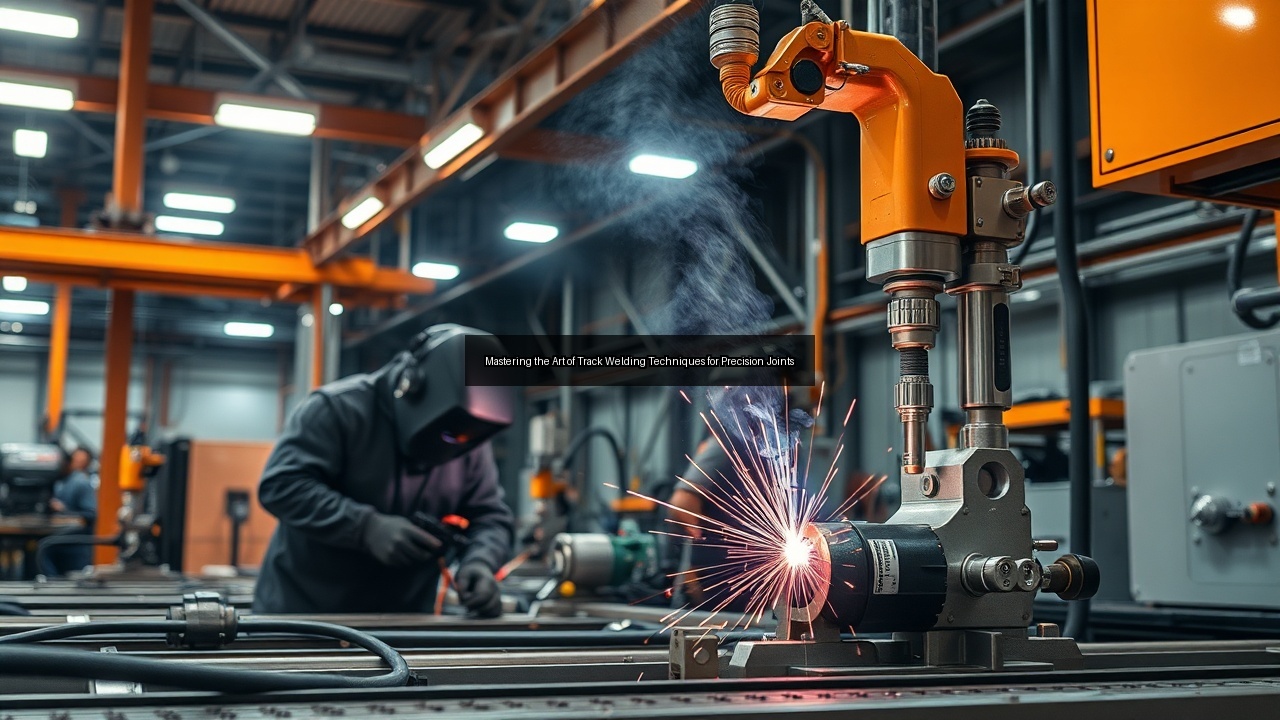
Track welding delivers consistent seams along linear paths using guided systems that keep the arc steady. Operators rely on a track welder to move the torch at controlled speeds, which reduces defects in long joints. This method suits fabrication shops and field repairs where straight or curved seams must hold under stress. Track welding equipment includes rigid rails and motorized carriages that follow the path precisely. Welders position the machine for track welding on plates, pipes, or structural beams. The process supports both manual and automated modes, letting crews adjust travel speed and amperage on the fly. Many projects use track welders to complete multiple passes without repositioning, which cuts downtime. Proper setup ensures the weld pool stays uniform, producing joints that resist fatigue and corrosion over years of service.
Importance of Precision in Welding
Precision determines whether a joint meets code or fails under load. A track welder maintains exact torch angle and speed, eliminating weave variations that create weak spots. Welders measure bead width and penetration depth after each pass to verify consistency. Small deviations in oscillation width or travel rate can trap slag or create undercut. Track welding machines equipped with digital controls let operators lock parameters before starting a run. This repeatability proves critical on pressure vessels and bridge components where inspectors demand full fusion. Crews also track heat input to avoid distortion in thin sections. Accurate guidance from the rail system keeps the electrode centered in the joint, which improves sidewall fusion and reduces rework. Precision ultimately lowers inspection failures and extends service life of the finished assembly.
Common Applications of Track Welders
Shipyards use track welders to join deck plates and hull stiffeners along straight seams. Pipeline contractors employ track welding machines for field tie-ins where portable rails clamp directly to the pipe. Fabrication plants apply the same equipment to build crane booms and heavy equipment frames. Railcar manufacturers weld side panels and underframes with Gullco track systems that follow curved contours. Storage tank erectors rely on track welding equipment to complete vertical and horizontal seams without scaffolding adjustments. Structural steel erectors weld column splices and beam connections using motorized carriages. Each application benefits from the stable travel path that keeps the arc focused and the weld metal deposited evenly. The versatility of track welders extends to repair work on mining equipment and power plant components where access limits manual techniques.
Essential Equipment for Track Welding
Types of Track Welding Machines
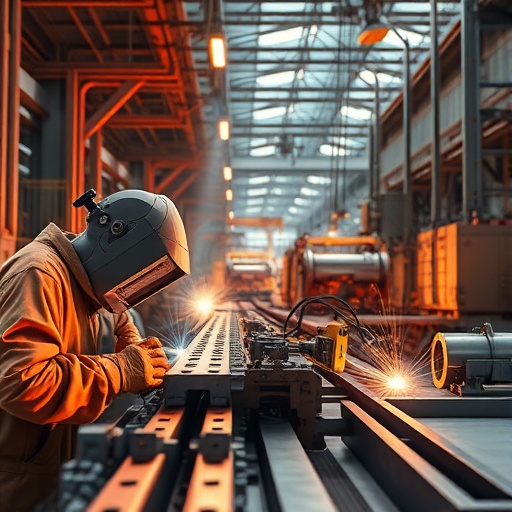
Track welding machines range from lightweight portable units to heavy-duty gantry systems. Portable models clamp onto standard rails and suit field repairs on bridges or tanks. Fixed installations integrate with positioners for high-volume production. Gullco International offers modular carriages that accept various power sources and allow quick rail extensions. Some machines for track welding feature dual-torch heads for simultaneous root and fill passes. Others include encoder feedback that maintains constant speed on inclined surfaces. Battery-powered versions operate in remote locations without generators. Hydraulic-drive units handle thick plate on ship panels. Selection depends on joint length, material thickness, and required travel speed. Shops often keep several carriage styles on hand to match different track welding projects without delay.
Key Features of Welding Machines
Modern welding machines for track welding include digital interfaces that store weld schedules and recall them instantly. Variable-speed drives let operators match travel rate to electrode diameter and joint geometry. Integrated oscillators create controlled weave patterns that fill wider grooves without manual manipulation. Many units accept both solid and flux-cored wire, expanding material compatibility. Gullco carriages add quick-release clamps that secure the machine to the rail in seconds. Remote pendants allow parameter changes without stopping the weld. Overload protection and automatic arc restarts reduce downtime when minor interruptions occur. Compact designs fit between stiffeners on pressure vessels. These features collectively improve repeatability across shifts and help crews maintain consistent quality on long production runs.
Welding Electrodes and Their Role
Electrodes deliver the filler metal and shielding gas or flux that protects the weld pool. For track welding, operators choose diameters that match joint thickness and machine amperage range. Solid wire works well on clean plate with external gas shielding, while flux-cored wire tolerates outdoor conditions. Proper electrode extension and angle ensure the arc stays centered on the track welder path. Crews match electrode composition to base metal to avoid cracking or brittle zones. Storage in dry ovens prevents moisture absorption that causes porosity. During operation, consistent wire feed through the torch prevents burn-back and maintains deposition rate. Track welding machines often include drive-roll tension adjustments that accommodate different electrode types without slippage. Correct electrode selection directly influences bead profile, penetration depth, and mechanical properties of the finished joint.
Advanced Techniques for Precision Joints
The Role of Oscillation in Welding
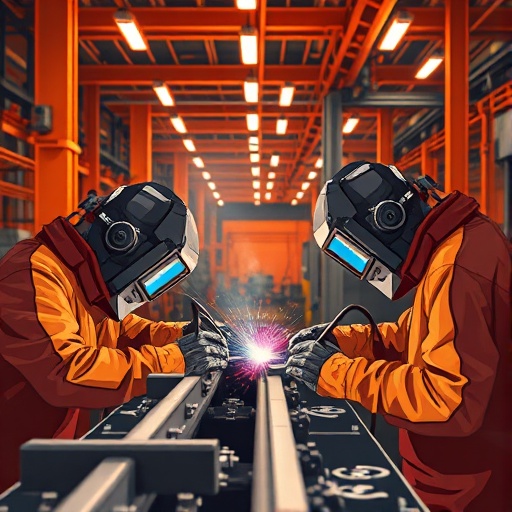
Oscillation widens the weld bead and improves sidewall fusion in groove joints. A track welder equipped with an oscillator swings the torch side to side at programmable frequency and amplitude. This motion distributes heat evenly across the joint, reducing lack-of-fusion defects. Operators adjust oscillation width to match groove preparation and travel speed. Too wide a weave risks undercut at the toes, while narrow oscillation leaves unmelted edges. Many Gullco systems integrate electronic oscillators that synchronize with carriage speed for uniform coverage. Welders monitor the molten pool through the arc and fine-tune parameters on the fly. Oscillation also helps bridge small gaps caused by fit-up variations. When applied correctly, the technique produces flatter caps that require less grinding and improves fatigue resistance in cyclic service.
Utilizing Connecting Rods for Stability
Connecting rods link the carriage to the torch holder and maintain constant torch-to-work distance on uneven surfaces. Track welders use these rods to absorb minor rail irregularities without lifting the arc off the joint. Adjustable rod lengths accommodate different rail heights and joint orientations. Rigid connections prevent torch wander that creates inconsistent penetration. In automated setups, the connecting rod transmits motion from the oscillator directly to the electrode, preserving weave geometry throughout the weld. Welders inspect rod bearings regularly to eliminate play that could shift the arc path. On vertical or overhead positions, the rod helps counter gravity effects on the weld pool. Proper use of connecting rods keeps the entire assembly stable, allowing higher travel speeds without sacrificing quality on long seams.
Ceramic Inserts for Enhanced Performance
Ceramic inserts back the joint and support the weld pool during root passes. Placed along the track welding path, they prevent burn-through on thin sections and allow higher amperage for better fusion. The inserts conduct heat away slowly, which helps form a uniform root bead without excessive reinforcement. After welding, the ceramic breaks away cleanly, leaving a smooth backside. Gullco systems often incorporate ceramic backing strips that align with the rail for consistent contact. Welders select insert thickness based on material and joint design to control heat input. This technique reduces the need for back gouging and speeds up production on pressure-retaining equipment. Ceramic backing also minimizes oxidation on stainless and nickel alloys, preserving corrosion resistance at the root.
Maximizing Efficiency and Return on Investment
Choosing the Right Welding Equipment
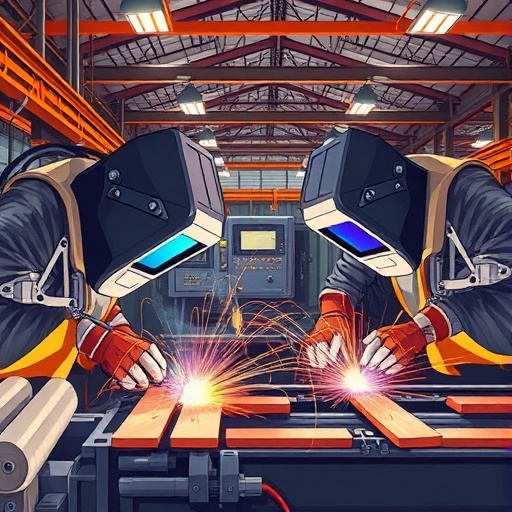
Selection begins with joint length, material grade, and required deposition rate. A track welder sized for short field repairs differs from one built for continuous production lines. Buyers evaluate rail flexibility, carriage payload, and compatibility with existing power sources. Gullco International models offer interchangeable components that grow with project demands. Shops compare travel speed ranges and oscillator options against typical weld procedures. Ergonomic controls and quick-setup features reduce operator fatigue on extended runs. Demonstrations on actual joint configurations confirm that the machine for track welding meets penetration and cap profile requirements. Proper equipment choice eliminates bottlenecks and supports consistent output across multiple crews.
Maintenance Tips for Track Welders
Daily inspection of drive wheels and rail surfaces prevents slippage that ruins weld consistency. Operators clean wire feeders and contact tips to avoid arc instability. Lubrication of oscillator bearings and connecting rod pivots keeps motion smooth. Track welding machines require periodic calibration of speed encoders and amperage displays. Replacement of worn ceramic inserts and electrodes maintains root quality. Storage of carriages in dry areas avoids corrosion on electrical connectors. Scheduled service intervals documented in logs help track component life and predict downtime. These habits extend equipment life and protect return on investment by minimizing unplanned repairs during critical project phases.
Evaluating Return on Investment in Welding Projects
Return on investment improves when track welders reduce labor hours and rework. Faster travel speeds with stable oscillation cut total arc time on long seams. Fewer defects lower inspection costs and schedule delays. Shops calculate cost per meter of weld by dividing equipment and consumable expenses by output volume. Gullco systems often show payback within months on high-volume contracts through consistent quality. Tracking metrics such as deposition rate, downtime, and consumable usage guides future purchases. Projects that standardize on reliable track welding equipment achieve higher throughput and stronger margins. Continuous monitoring of these indicators ensures the initial capital outlay delivers measurable gains across multiple contracts.